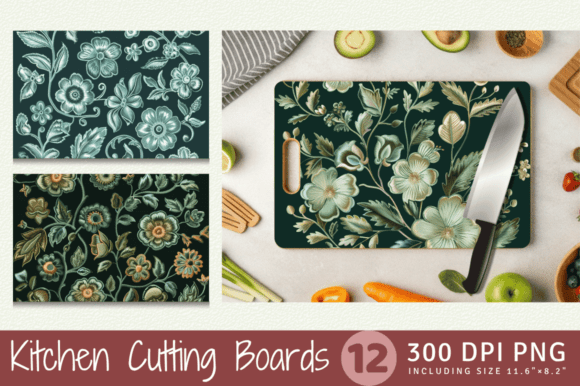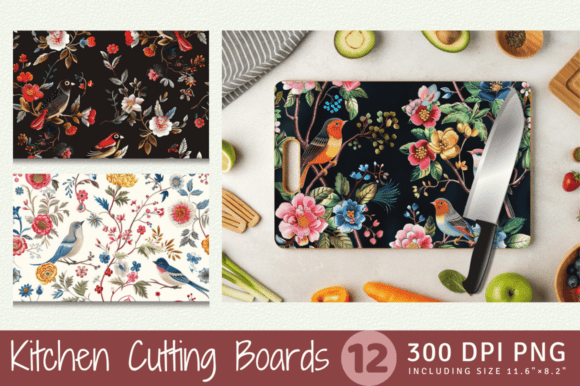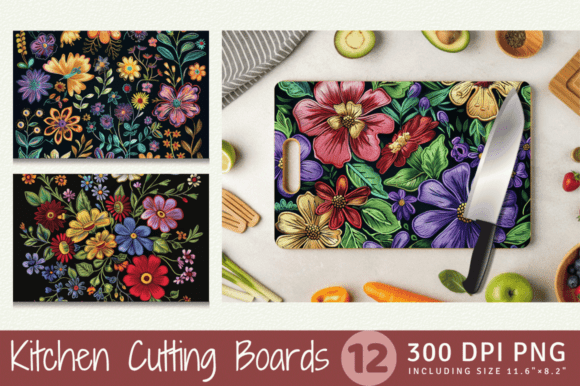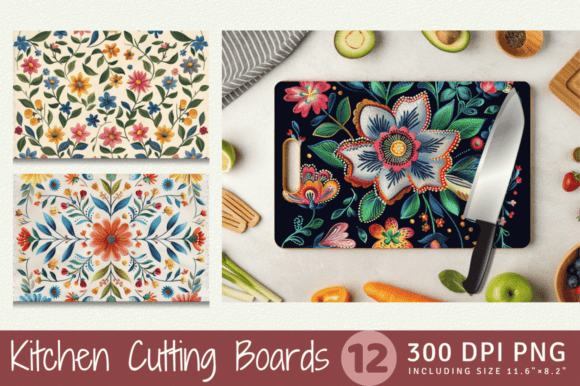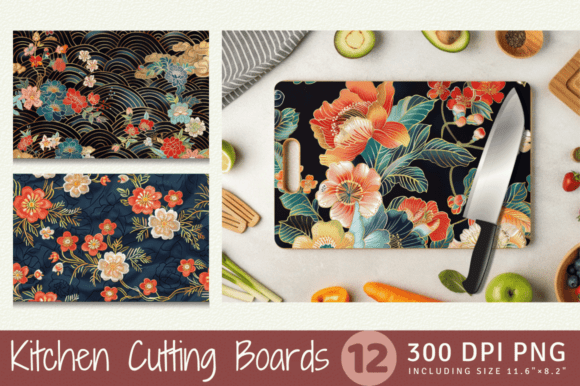
Japanese Floral Embroidery Cutting Board
When I first opened the folder for this Japanese Floral Embroidery Cutting Board, my immediate reaction was one of cautious optimism. As a designer who has stitched thousands of designs, I know that "sublimation" and "embroidery" are two very different languages. This product is described as a sublimation design intended for kitchen decor, but it is being marketed toward those looking to create custom printed boards or digital assets. However, the visual language—the intricate floral patterns, the delicate linework, and the traditional aesthetic—screams "machine embroidery." My goal here is not to review the physical cutting board itself, but to evaluate the design asset as if it were an embroidery file destined for the hoop. If you are an Etsy seller, a craft business owner, or a hobbyist looking to expand your design assets, understanding how this graphic translates from screen to stitch is critical.
First Impressions: Mood and Visual Personality
The mood created by this Japanese Floral Embroidery Cutting Board design is serene, sophisticated, and distinctly cultural. The floral elements likely draw inspiration from classic motifs such as cherry blossoms, chrysanthemums, or wisteria, arranged in a composition that feels balanced yet organic. In the world of handmade products, mood is everything. A design that feels calm and elegant naturally appeals to buyers looking for nursery decor, boutique branding, or high-end home goods.
From a layout perspective, the design appears to have a strong central focus with potential for border applications. This versatility is a huge plus for custom apparel and accessories. Does it feel cluttered? Or does it breathe? For an embroidery project to succeed, negative space is just as important as the stitched area. If the floral density is too high, it risks becoming a muddy blob when stitched on fabric. But if the lines are clean and the spacing is intentional, it promises a beautiful finished product that elevates the value of whatever it is attached to.
Real-World Application: Where This Design Shines
Let’s talk about real use cases. Imagine you are preparing inventory for the upcoming holiday season. You need a personalized gift that feels thoughtful but isn’t overly masculine or feminine. This Japanese Floral Embroidery Cutting Board design fits perfectly into that niche. Here is how I see it performing in specific scenarios:
- Kitchen Towels and Aprons: This is the most natural fit. The theme aligns with cooking lovers, making it ideal for kitchen decor. Stitching this onto a linen tea towel adds a tactile luxury that customers love. The floral pattern softens the utilitarian nature of a cutting board or apron, turning a household item into a piece of art.
- Tote Bag Designs: For the Etsy seller targeting students or eco-conscious shoppers, this design works well on canvas totes. The contrast between the rugged canvas and the delicate floral satin stitch creates a pleasing textural juxtaposition. It signals that the brand cares about detail.
- Baby Embroidery: Soft pastels often accompany Japanese floral themes. This design could be adapted for baby onesies or burp cloths. The gentle imagery conveys care and safety, which are key emotional triggers for parents buying personalized gifts.
- Embroidered Patches: If the design is self-contained within a clear boundary, it makes for a excellent embroidered patch. These can be ironed or sewn onto denim jackets, beanies, or backpacks, extending the life of the graphics beyond their original intent.
However, we must remember that this is originally a sublimation design. Sublimation relies on ink saturation and color blending, whereas embroidery relies on thread texture and light reflection. When evaluating this as an illustrations category item, ask yourself: will the colors translate well through thread? Dark blues might need multiple passes, while bright pinks might show every single stitch imperfection.
Technical Considerations and Stitch Density
This is where many designers stumble. Just because a graphic looks good on a screen doesn't mean it stitches well. The stitch density of a Japanese Floral Embroidery Cutting Board design needs careful scrutiny. Floral petals often require fill stitch techniques to look full and lush. If the underlay is insufficient, the fabric may pucker, ruining the professional look of the finished product.
Pay close attention to the smaller details. Are there tiny leaves or fine veins in the flowers? These areas are prone to breaking needles or tangling thread if the hoop size is too small or if the fabric is unstable. I always advise testing these intricate corners on scrap fabric first. Use a proper stabilizer—cut-away for stretchy fabrics like sweatshirts, and tear-away for stable woven fabrics like cotton towels. Without the right support, even the best machine embroidery design will fail.
Another technical note involves the thread colors. Sublimation allows for gradients and infinite color shifts. Embroidery is limited by the spools you have. If the original design uses a subtle gradient of purple to pink, you will need to choose a thread color that approximates the average tone or use a multi-color setup. Be realistic about what your machine can achieve. A flat, solid color block often reads better than a poorly executed gradient in embroidery.
Pitfalls to Avoid
While this design has potential, there are situations where it should be used carefully. Avoid placing this on highly textured fabrics like heavy wool or terry cloth unless you are using a thick stabilizer and a larger needle. The thread may not penetrate evenly, leading to skipped stitches. Similarly, be wary of using this on dark fabrics without a substantial underlay. The floral colors might get lost in the darkness of the base material, reducing the visual appeal and customer trust in the quality of the work.
Also, consider the scale. If you try to shrink this digital embroidery file down to fit a tiny chest pocket on a polo shirt, all the nuance will be lost. It becomes just a blurry shape. Reserve this design for medium to large hoop sizes where the details can breathe. This is crucial for maintaining the professionalism of your craft business.
Final Verdict for Creators and Sellers
Ultimately, the Japanese Floral Embroidery Cutting Board design offers a strong foundation for creating premium handmade products. Its aesthetic aligns perfectly with current trends in minimalist yet culturally rich home decor. For the small shop product creator, it provides a versatile template that can be adapted across various categories—from apparel decorators adding flair to hoodies to print-on-demand sellers offering unique kitchen textiles.
Before committing to a large production run, I strongly recommend creating a printable mockup to visualize the final result, then stitching a physical sample. Check the thread color contrast, inspect the stitch density for puckering, and ensure the licensing terms allow for commercial use of the finished items. If the test sample holds up, you have a winner. This design has the potential to drive engagement and sales by offering a touch of elegance that resonates with buyers seeking quality and authenticity in their embroidery projects.