Rooster with Floral Pattern Redwork Review
As an embroidery designer who spends weekends hunched over a table at local craft fairs, I know that the difference between a design that sits on your hard drive and one that actually sells comes down to visual impact and practical production. When I first saw Rooster with Floral Pattern Redwork, I didn’t just see a digital file; I saw potential booth inventory. This review breaks down exactly how this piece fits into a commercial handmade business, specifically for those of us looking to create high-quality craft fair products that resonate with buyers.
First Impressions: Farmhouse Charm Meets Modern Clarity
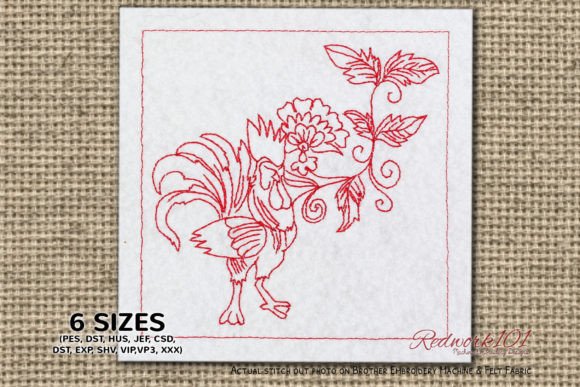
The title alone suggests a strong aesthetic direction. Redwork is a classic embroidery style known for its bold, single-color outlines, but adding a floral pattern introduces a layer of softness and complexity. In my experience, designs that blend rustic elements like roosters with delicate botanicals tend to perform exceptionally well in the current market. They bridge the gap between traditional farmhouse decor and modern, curated aesthetics.
Visually, Rooster with Floral Pattern Redwork strikes me as both decorative and premium. It feels intentional rather than generic. For a handmade shop owner or an Etsy seller, this kind of character is crucial. Buyers at craft fairs are often looking for items that feel personal and artistically distinct. The inclusion of a floral wreath element (categorized under Floral Wreaths) adds a frame-like quality that makes the design versatile. It can act as a focal point on a large canvas or a charming accent on smaller goods. The description notes that the outer box color may vary, which is a common trait in many embroidery files. While this offers customization flexibility, it also means you must be careful with thread selection to ensure the final look remains cohesive.
Product Potential: Where Does This Design Shine?
Not every machine embroidery design works on every product. To maximize sales, we need to match the scale and detail of the design to the item. Here is how I envision Rooster with Floral Pattern Redwork performing across various categories:
- Tote Bags and Market Bags: This is perhaps the strongest application. A tote bag provides a large, flat surface area where the floral details can breathe. The rooster becomes a statement piece. For an Etsy seller, listing a custom embroidered tote with this design appeals to gardeners, farmers, and anyone who loves country-style living.
- Kitchen Towels and Aprons: Tea towel embroidery is a staple at craft fairs because it is an affordable impulse buy. If the design is sized correctly, it looks elegant on a white or cream linen towel. Similarly, an apron embroidery application on the bib or pocket area adds a touch of personality to kitchenware without overwhelming the garment.
- Patches and Pouches: The description mentions an optional "Box Stitch." This is a critical detail. If you plan to use this as an embroidered patch, that box stitch likely serves as a border or backing. Ensure you test this carefully, as dense borders can make patches stiff. Small fabric pouches or zippered bags featuring this design make excellent gift sets when paired with tea towels or soaps.
- Hats and Caps: Curved surfaces present a challenge. If the design is too wide, it will distort on a cap. However, if scaled down to a standard chest logo size, the rooster head combined with a small floral wreath could work beautifully on denim or twill caps, appealing to a masculine or unisex demographic.
Production Practicality and Sales Strategy
From a business perspective, efficiency is key. Can you produce this in batches? Yes, provided the stitch density is manageable. Designs with moderate stitch density run faster and cause less hoop burn, which keeps your production time low and profit margins healthy. Rooster with Floral Pattern Redwork appears to have enough negative space in the floral elements to allow for efficient stitching.
Photography plays a huge role in selling handmade products. This design photographs well because the contrast inherent in redwork stands out against neutral backgrounds. Whether you are taking photos for your booth display or creating a printable mockup for your online store, the clean lines of the rooster and the organic shapes of the flowers will render clearly in images. Avoid cluttering the background; let the design speak for itself. Use natural light to highlight the texture of the thread, which signals quality to the buyer.
For booth displays, grouping this design across different items creates a cohesive brand story. Imagine a stack of matching aprons and tea towels next to a few tote bags. The repetition of the motif builds visual interest and encourages customers to buy multiple items. It reinforces the idea of a complete lifestyle set, which can increase your average transaction value.
Critical Technical Considerations
Before you start running this design through your machine en masse, there are several technical checkpoints you must address. As an experienced designer, I cannot stress these enough:
- Stabilizer Selection: The choice of stabilizer depends entirely on the fabric. For stretchy knit fabrics like t-shirts, a cut-away stabilizer is non-negotiable to prevent distortion. For woven cottons like towels or tote bags, a tear-away might suffice, but a wash-away backing can provide extra stability during stitching. Always check the recommended stabilizer for your specific fabric type.
- Thread Contrast and Color: Since the outer box color varies, you have creative freedom, but you must ensure sufficient contrast. If you are embroidering on dark fabric, light threads are essential. On light fabric, dark threads pop better. Test your thread colors on scrap fabric that matches your final product to avoid surprises.
- Hooping and Spacing: Confirm the hoop size required by the design. Attempting to shrink a large design too much can result in lost details, especially in the tiny petals of the floral wreath. Conversely, enlarging it too much may cause stitching issues. Maintain proper spacing from edges to prevent puckering.
- Dense Areas and Tiny Details: Inspect the stitch count in dense areas. If the rooster’s comb or the flower centers are too tight, they may become stiff or lose definition. Run a test on your actual product fabric to inspect clarity. If the details are too fine, consider resizing the design slightly larger to preserve legibility.
Final Verdict for Craft Fair Sellers
Rooster with Floral Pattern Redwork is a strong contender for any small shop product lineup. It hits the sweet spot of being recognizable, aesthetically pleasing, and versatile. It appeals to a broad audience, from garden enthusiasts to lovers of rustic home decor.
To succeed, focus on quality execution. Use high-quality threads, ensure your tension is perfect, and finish your edges cleanly. A well-finished product tells the customer that the maker cares about detail, which justifies a higher price point. Remember to verify all technical specifications, such as exact stitch counts and commercial licensing terms, directly from the provider before mass production. By treating this design with the respect it deserves, you can turn a simple digital embroidery file into a best-selling commercial embroidery asset that drives traffic to your booth and fills your online cart.